
Defying Age and Gravity: How Legacy Rockers Keep the Show Alive in 2026
As the lights go down in the stadium and the crowd lets out an ear-splitting roar, everything comes to a halt. You witness an 80-year-old singer running from one end to the other of a huge stage and singing with such vigor that young 20-somethings would be envious of him. From the seats, it looks nothing less than magical. It looks nothing less than rock'n'roll immortality. But what the truth about playing at such an intense level for decades remains completely shrouded from the fans' view. The ones up there aren't invincible heroes. They are mortals taking their bodies to the ultimate limit.
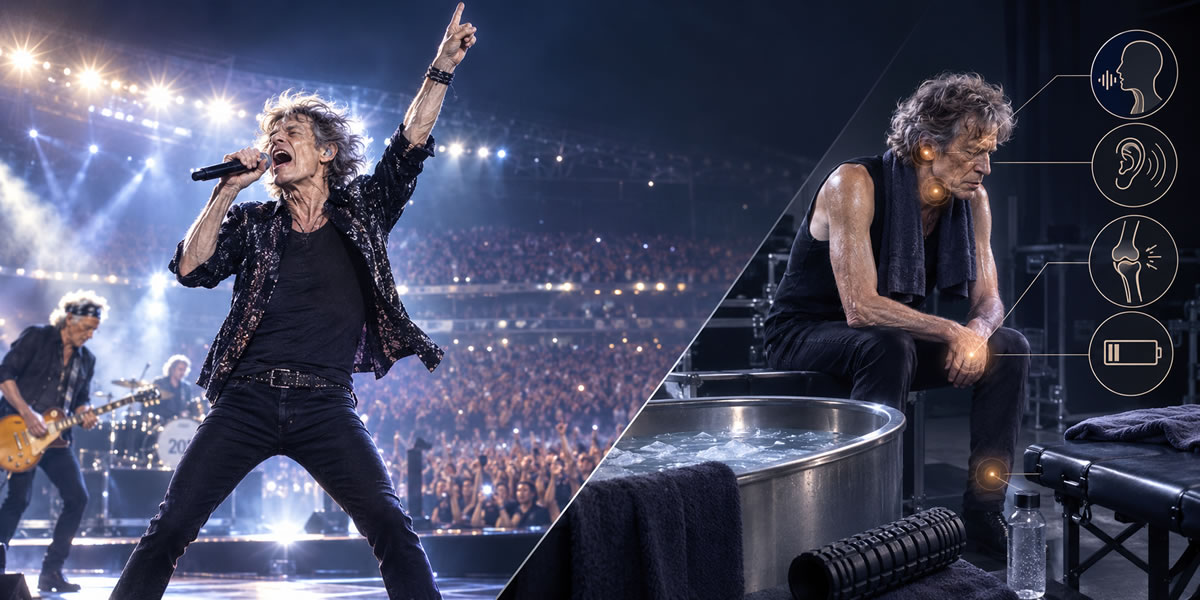
The backstage environment today is not nearly as chaotic as it was during the seventies. The odds of you stepping on a pile of used whiskey bottles have dramatically decreased; meanwhile, you’re more likely to stumble across an ice bath, a foam roller, and even a physiotherapy table. Years of extensive touring take their toll on one’s body very precisely and in many different ways. Chronic tinnitus, ruined vocal cords, as well as joint deterioration can be listed as some of the effects that musicians experience.
Honestly, it’s not uncommon for a legendary musician to sit in a quiet hotel room after a gig, skipping the afterparty to scroll through holistic wellness forums, desperately typing into a search bar to see if amla help with neuropathy in my feet and hands with numbness and pain just so they can physically manage the next soundcheck.
The Engine Room: Drummers and Joint Survival
To be honest, being a drummer may be one of the most physically taxing professions in the entertainment industry. Take a moment to reflect on it. You are essentially going at full throttle on your instruments using only sticks and hitting everything with your maximum strength for two hours each day for fifty years straight.
As much as it may affect a drummer’s physical health, the effects that years of drumming have on one’s shoulder, elbow, and wrist are absolutely immense. While contemporary drum setups are getting more and more ergonomic every year, the damage done by previous years is still there for the legacy musicians to deal with. A lot of these older musicians had to change their drum technique entirely and lower their thrones due to the degeneration of the discs in their back. However, they are not playing ballads anymore – when legacy bands are headlining the big festivals these days, they play next to the latest hits and the legacy bands have to keep up with them. Thus, some veteran drummers might have to prepare themselves to match the vibe of an enormous hit from 2025 such as “Beautiful Things.”

Guitarists and the Loss of Sensation
Guitar players and bassists, on the other hand, fear the degeneration of fine motor control. An elaborate and dazzling solo is a combination of brain-to-body connection and fingertip agility.
With the onset of arthritis or peripheral neuropathy, the fingers would no longer do what the brain tells them to. And this can be frightening if you are someone who builds your identity around the fretboard. You will notice older guitar players today use larger guitar picks, strings that are lighter and require less strength to bend, and have even modified their signature riffs to be easier on their fingers. They do what they can to work smarter. You would see some of them doing special stretches or immersing their arms in warm water backstage to get the blood moving just before they perform the song which they've played forty times on the radio already. And all because they want to give fans exactly what they expect, even if it takes hurting themselves to achieve it.
Frontmen: The Miles Walked on Stage
For singers, there's the particular set of physical horrors that go along with their trade. Sure, voice is extremely important, hence all those humidifiers and vocal rests, but the physical toll of being a frontman is enormous.
It is said that Mick Jagger runs miles upon miles per concert. It may be fine to do it in your twenties, but in your seventies and eighties, that's definitely an extreme sport. All that jumping around on concrete floors damages your knees and feet. Then you add to the equation the elaborate costumes that you wear on stage, and what you get is extreme exhaustion and sore feet. It is rather amusing to note that there's an intergenerational link here. While young artists such as Sabrina Carpenter may moan about the torture of performing "Espresso" every day in those platform shoes, the veterans know that feeling.
The Ultimate Dedication
Why would they do this? Why don’t they just retire and move into a huge mansion where they will never have to see a tour bus again?
Ask them, and the response is pretty much always going to be the same – it is for the fans, and it is about the music. The physical training needed for touring in 2026 is hard, ugly, and really, really hurts. But then, when the first note is played, and fifty thousand people are singing along, all that pain goes away. They go through the freezing water, the weird herb concoctions, and the physiotherapy to have two hours of pure exhilaration.