Peter Gabriel released the Bright-Side Mix of “Face the Wall” on October 10, adding Mark “Spike” Stent’s version to a song first issued in its Dark-Side form on September 26. The two releases sit inside the campaign for o\i, his thirteen-track album due on November 27. For listeners following the monthly songs, the new arrival is another view of an existing piece.
Is this an additional song?
No. “Face the Wall” is the tenth song unveiled from the album, and its two stereo versions have different mixing credits. Tchad Blake handled the Dark-Side Mix; Stent handled the Bright-Side. The writing and production remain Gabriel’s. Counting both releases as separate compositions would make the album look bigger than its announced thirteen-song tracklist.
There is a useful listening experiment here. Choose the same passage in each version, rather than play one today and try to remember it next week. Listen for where the voice, piano and orchestra sit in relation to each other. That is a way to explore a mix, not a claim that we have tested these recordings or decided which is better.
The credited players include Tom Cawley on piano, Tony Levin on bass, David Rhodes on guitar and Manu Katché on drums. The New Blood Orchestra provides brass and strings, with the orchestral arrangement credited to John Metcalfe and Gabriel. Knowing those parts are present gives a listener something specific to follow while comparing the versions.
Which album edition includes both?
The announced four-CD package contains the Bright-Side and Dark-Side mixes, spread across two discs each, with a thirty-two-page book. The double-vinyl editions are offered separately by mix. Buying one of those vinyl editions therefore does not mean buying both stereo treatments. A digital-only Dolby Atmos In-Side mix by Hans-Martin Buff is also part of the album plan.
Our earlier look at Roxy Music’s guitar-and-vocal “Pyjamarama” demo followed a song back to a different stage of its development. Gabriel’s release asks another question: how can one composition be presented through two mixes? An early sketch and an alternative stereo mix give different kinds of access to a song. Neither is simply another new title.
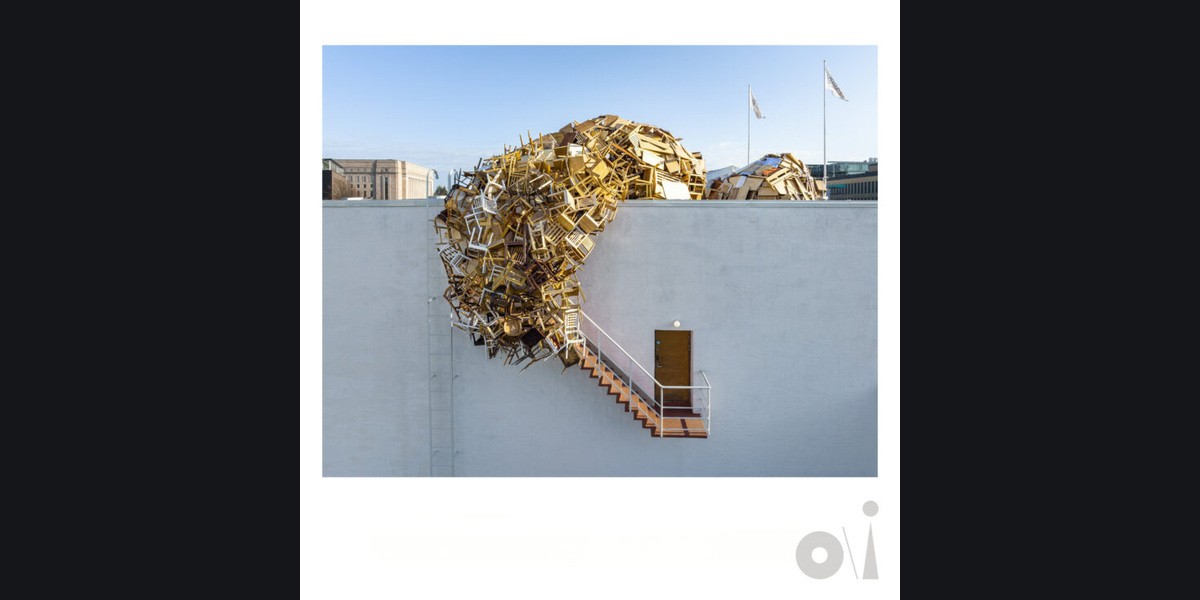
The cover provides a second point of comparison. It uses Tadashi Kawamata’s installation The Nest, photographed at Amos Rex in 2022 by Mika Huisman. Chairs spill over a solid wall in the image. Against Gabriel’s publicly described themes of ageing and mortality, that precarious construction gives the artwork a tension of its own. It is something visible to consider while listening, without turning the cover into proof of what either mix sounds like.