
How Sound and Rhythm Shape Browser-Based Entertainment
Have you ever tried to play an online game when you are waiting in line for your coffee in a cafe, but in total silence mode? This is a totally different feeling. Normally, it feels really empty. You do something on the screen; it moves somehow, but you don't feel that satisfaction. We always admire great graphics and silky smooth animations, but actually, it's audio that makes digital entertainment work.
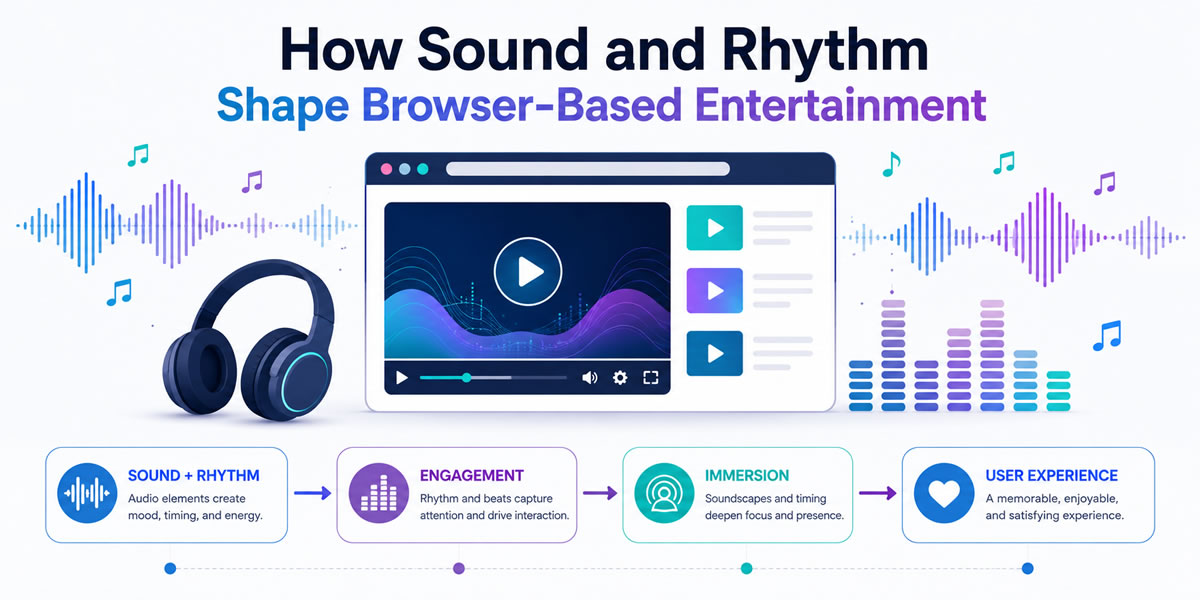
What is the real factor that keeps your interest when you open an online browser tab to pass 15 minutes on a Tuesday?
The Metronome Behind the Screen
So let’s take a brief moment to look at pacing. Sound engineers in the technology industry have realized that people are rhythmic beings by nature. Just as our heartbeat governs our natural tempo, a game's soundtrack governs our digital tempo. In browser games, the music works at a specific frequency. If it is too fast-paced, it makes you feel stressed and anxious. If it is too slow-paced, you lose concentration and leave the tab.
It tends to come from the sustained, moderate tempo loop. The effect creates a hypnotic state in one’s brain, which is precisely the point of talking about the low state in digital spaces for psychologists. One stops thinking about the physical aspect of pressing a button or touching a flat screen and enters the experience. Music becomes a kind of metronome, which leads all one’s actions, and every click, swipe, or drag is a note in the underlying tune.
The Crescendo and the Click
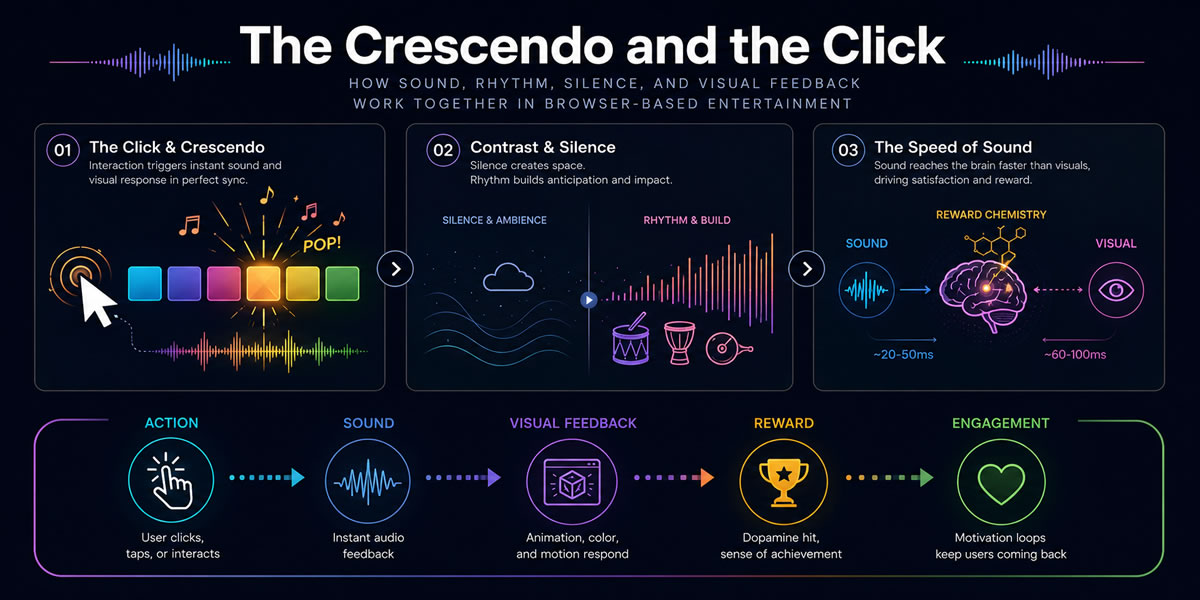
But background music is only the backdrop for what is really happening here. When we consider audio feedback- those sudden and crisp sound effects that occur at the very moment you act on the computer screen- then psychology gets very interesting indeed.
Take the incredibly satisfying 'pop' sound effect of clearing a line of digital blocks, or the progressively chiming synth sound effect that perfectly complements an animated visual display. This is no accident. These sounds are specifically created to reflect the user's actions. Audio engineers are known to spend time in gaming environments studying the loop timings of audio in relation to animations.
A glance at platforms dedicated to casual, fast-paced titles—such as Hot Hot Fruit slot reveals this exact dynamic in real time. Their fast-paced electronic soundscapes are structured to keep the energy elevated without overwhelming the player’s senses. Every user action produces an equal, often musical, reaction. This synchronized feedback loop makes the flat digital interface feel alive, tactile, and incredibly responsive. It almost feels like you are plucking the strings of an instrument rather than just interacting with a web browser.
The Power of Contrast and Silence
But here is the thing about high-quality audio design: constant and relentless noise can be very exhausting for people. If the audio is noisy all the time, it will turn into static within a few seconds. In order not to get our brains overloaded with the sound, we will simply ignore it.
This is why the best browser entertainment relies on contrasts. There has to be a difference in the sound of 'waiting' and 'action'. For example, when the person only looks at the main menu or waits between the levels, the sound may become ambient noise. Just some synthesizer pads in the background. However, when the user starts interacting with the game, all layers start adding up. Percussion, change of the pitch.
Such manipulation with the interactive sound creates a lot of anticipation. It is like the trick that professional DJs use right before dropping the bass at some big summer music festival, but on a smaller scale. It is the difference between anticipation and loudness that makes the experience dynamic.
The Speed of Sound
Why does the union of audio and visual elements have such a universal effect? This is basically a matter of biology. The brain processes auditory stimuli much faster than visual elements. By the time you become aware that a flashy, vibrant animation has passed before your eyes, your brain would have already processed the cheerful chime. And it is the moment when that little reward shot of dopamine has been released in your brain.
It is this very instant connection which makes audio elements an essential component of casual games. A designer could spend months designing the ideal color schemes and character designs, but if the timing of the audio elements goes even half a second wrong, the entire illusion is destroyed. While visuals may add to the personality of the entertainment online, it is the rhythm that gives the entertainment a lifeline. It is easy to note how this ties into the greater evolution of video games music.
Final Thoughts
Thus, the next time you feel yourself becoming engrossed in an attractive browser game to the point that you forget about time, run this simple test: Turn off the sound.
Watch how fast the magic disappears and how mechanical the entire experience becomes. Certainly, the colors and programming are working their hardest, but what made you stay is the beat. It seems that when we play these games, we are actually hearing them.